In the world of motion control, heat is the silent killer of performance. While some energy loss is inevitable, uncontrolled temperature rises lead to catastrophic system failure.
- The 10-Degree Rule: Every 10°C increase above the rated limit cuts insulation life by 50%.
- Magnet Integrity: Excessive heat can cause irreversible demagnetization in BLDC motors.
- The Yenshen Advantage: Extend equipment life by 30% through material science and advanced cooling.
Why Heat Is the Number One Enemy of Motors
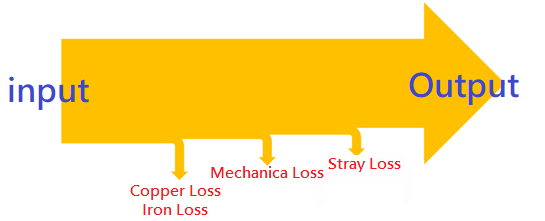
In electrical engineering, efficiency is the measure of how much electrical energy is successfully converted into mechanical work. The energy that doesn't make the transition is lost as heat. Understanding these losses is the first step toward high-performance design.
- Copper Loss (Resistive Loss): As current flows through the copper windings, internal resistance generates heat. This is governed by the $I^2R$ law—meaning as load increases, heat production rises exponentially.
- Iron Loss (Magnetic Loss): This occurs within the motor’s stator core. When magnetic fields rapidly alternate, they create eddy currents and hysteresis losses. These are particularly aggressive in high-speed applications.
- Mechanical & Stray Losses: Often overlooked, friction in bearings and windage (air resistance inside the motor) add cumulative thermal stress to the system.
Consequences of Excessive Motor Temperature
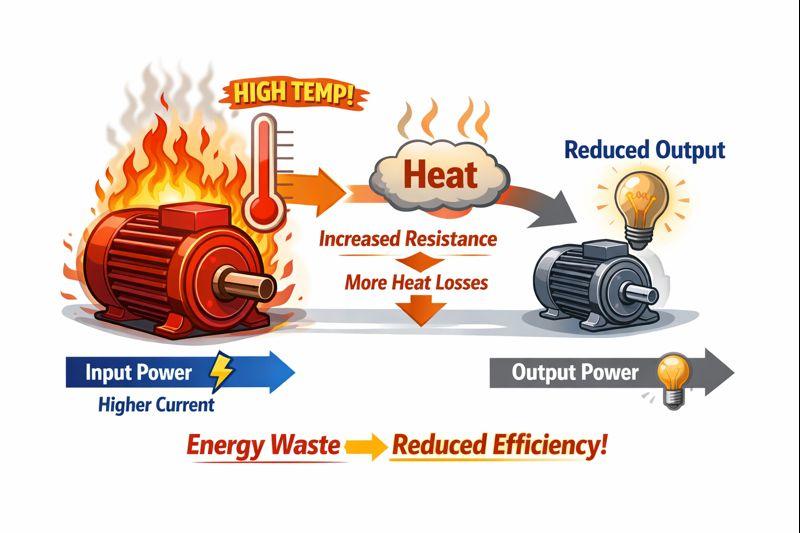
When a motor operates beyond its thermal design limits, the damage is often cumulative and invisible until the moment of total failure. Understanding how heat attacks different motor components is essential for preemptive maintenance and long-term system reliability. Below is a detailed breakdown of the chain reaction caused by thermal stress:
| Impact Area | Technical Evolution of Failure |
Long-term Operational Risk |
| Insulation System |
Continuous heat makes winding coatings brittle and prone to micro-cracking. |
Phase-to-phase short circuits and complete motor burnout. |
| Permanent Magnets | High temperatures disrupt the magnetic domain alignment in BLDC/Servo motors. | Permanent torque loss, requiring higher current for the same load. |
| Bearing Lubrication | Heat lowers the viscosity of grease, leading to metal-on-metal contact. | Increased noise, vibration, and eventual mechanical seizure. |
| Structural Integrity | Differential thermal expansion causes the shaft and housing to misalign. | Premature wear of seals and increased mechanical resistance. |
Key Takeaway from Thermal Risks: The most critical takeaway is that heat-related damage is often irreversible. For instance, once a magnet is demagnetized or insulation becomes brittle, the motor's efficiency can never be fully restored to its original state. This "thermal aging" doesn't just shorten the equipment's lifespan; it significantly increases your Total Cost of Ownership (TCO) due to unexpected downtime and increased energy consumption.
How Can Motor Heating Be Reduced?
To achieve a 30% increase in service life, engineers must balance "Heat Suppression" with "Heat Extraction." Here is how Yenshen Electric approaches thermal management:
Reducing Heat at the Source (Material Engineering)
The most cost-effective cooling is the heat that is never generated. We achieve this through:
- High-Fill Winding Technology: By optimizing the slot-fill factor and using larger conductor diameters, we significantly lower electrical resistance ($R$), curbing Copper Loss at the source.
- Premium Silicon Steel Laminations: We utilize ultra-thin, high-permeability steel sheets. This reduces the path for eddy currents, keeping Iron Loss at a minimum even during high-frequency operation.
Enhancing Heat Dissipation (Thermal Path Optimization)
Efficient motors need a clear path to "exhale" heat. Our designs include:
- High-Surface-Area Housing: Precision-engineered cooling fins increase the contact area with ambient air, facilitating faster passive cooling.
- Active Cooling Integration: For heavy-duty lifting or high-duty-cycle tasks, we implement forced-air fans or liquid-cooled jackets to maintain a stable thermal equilibrium.
Maintenance & Environmental Control
Even the best motor requires proper "breathing" space. We advise our clients on:
- Debris Management: Regular cleaning of cooling fins is vital. Dust and oil buildup act as thermal insulators, trapping heat inside the motor.
- Ambient Airflow Design: Ensuring the motor is not installed in a "dead-air" pocket, allowing natural convection to assist the cooling process.
Conclusion: Build for Reliability
Motor overheating is a manageable challenge. By combining superior material selection with intelligent thermal design, Yenshen Electric helps you minimize downtime and maximize ROI. Don't let heat compromise your precision—invest in a solution built to stay cool under pressure.